
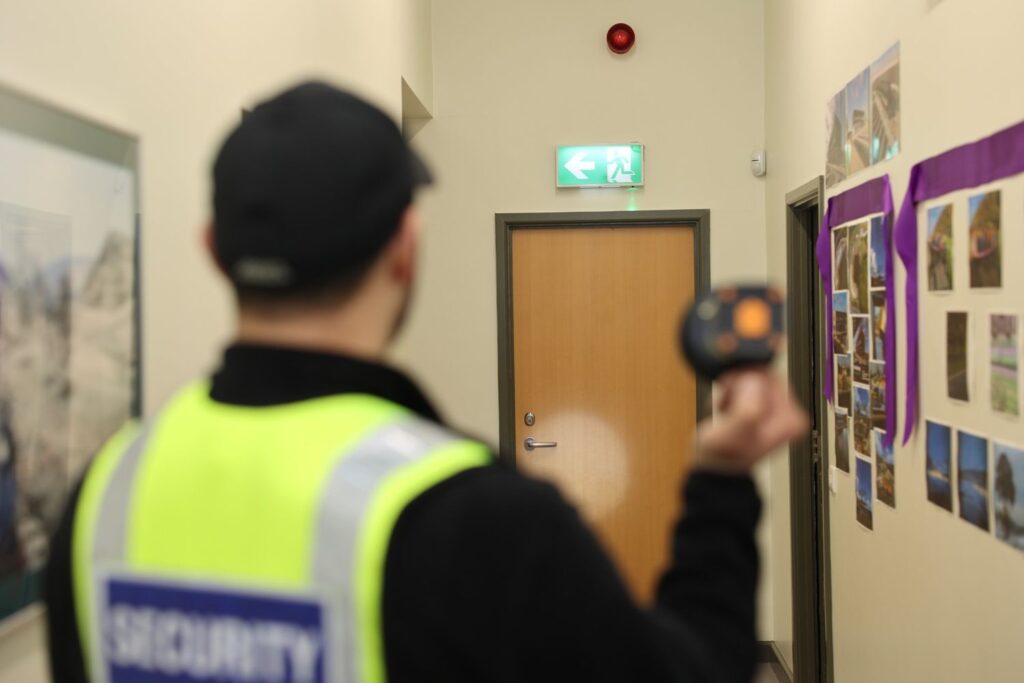
Security across commercial and residential premises in the UK continues to evolve as risks become more complex. A well-structured security patrol forms a key part of this approach, offering both prevention and rapid response.
A security patrol is a proactive inspection conducted by trained security personnel to detect and deter illegal activity, safety hazards, and emergency situations. It can help identify vulnerabilities and health risks on a site, improving safety standards and potentially reducing insurance premiums for property owners.
Security patrol services provide a visible deterrent against crime, significantly reducing the likelihood of theft, vandalism, and other criminal activities on properties. They also support compliance with insurance requirements while helping maintain a safe and controlled environment.
In this guide, we explore exactly what security patrol officers check during a site visit and why these checks and security measures are essential for commercial properties.
What Is the Purpose of a Security Patrol Visit?
The purpose of a security patrol is rooted in prevention, visibility, and control. Whether carried out by mobile patrol security guards or on foot, patrols are designed to detect risks early and respond before incidents escalate.
Security patrols provide a visible deterrent against crime, significantly reducing the likelihood of theft, vandalism, and other criminal activities on properties. The visible presence of trained security guards and marked vehicles discourages offenders from targeting a site.
Uniformed guards and marked patrol vehicles discourage potential offenders by serving as a strong psychological deterrent. This presence reassures employees, visitors, and residents, improving confidence in the safety of the premises.
The three main types of security patrols are foot patrols, vehicle patrols, and mobile patrols, each serving different operational needs and environments. Foot patrols involve security guards walking designated areas, while mobile patrols use vehicles to cover larger sites efficiently. Static patrols, also known as fixed-point security, involve guards stationed at key access points.
Regular security patrols help identify vulnerabilities and manage risks, providing a proactive approach to crime prevention. They also allow security personnel to monitor access control, observe suspicious activities, and respond to emerging threats.
Security patrols provide much faster response times than local law enforcement for incidents such as break-ins, fires, or medical emergencies. This rapid response can prevent damage, reduce loss, and protect lives.
The presence of security patrols helps create a safer environment, improving the sense of safety for tenants, employees, and residents. It is not simply about reacting to crime but maintaining continuous oversight of the premises.
How Security Patrol Officers Prepare for a Site Visit
Before arriving on site, security officers follow structured procedures to ensure they are ready to identify risks, respond to incidents, and maintain control of the premises.
Licensing, Compliance and Professional Standards for Security Officers
Every security patrol officer in the UK must hold a valid SIA licence issued by the Security Industry Authority. This confirms that the individual has completed the required training and passed background checks.
To become a Security Patrol Officer in the UK, individuals must obtain a relevant license, such as the SIA Door Supervisor Licence or the SIA Close Protection Licence, which equip them with essential skills for the role. The SIA Door Supervisor Licence requires a six-day training course, while the SIA Close Protection Licence involves a sixteen-day course, both of which include multiple-choice exams and practical assessments.
All security personnel in the UK must comply with strict regulatory standards. This ensures consistency across the security industry and guarantees that trained security guards can manage incidents, handle conflict resolution, and protect property effectively.
Security Patrol Officers are expected to maintain a strong physical presence and be physically fit, as the role involves constant monitoring of premises and potentially confronting threats.
Reviewing Site Instructions and Patrol Routes
Before deployment, security officers review detailed assignment instructions provided by the client or control room. These instructions outline:
- Key access points and restricted areas
- Patrol routes and designated areas
- Known security concerns or previous incidents
- Emergency procedures and escalation contacts
Understanding patrol routes is essential. Random or intermittent patrols are often used to prevent predictability. Random or intermittent patrols are conducted without a fixed schedule, preventing offenders from predicting security patterns and enhancing deterrence.
Mobile patrol security can be tailored, allowing for increased frequency during high-risk times without the cost of full-time security. This flexibility ensures that businesses receive the right level of protection based on their security needs.
Equipment and Mobile Security Checks
Before starting a security patrol, officers must ensure all equipment is fully operational. This includes:
- Radios and communication devices linked to the control room
- Mobile device applications used for real time monitoring
- Guard tour systems such as QR patrol, NFC, or physical tags
- Body-worn cameras where required
- Surveillance cameras access and alarm systems interface
Testing equipment ensures that patrol officers can log activity, report incidents, and respond without delay. Mobile security patrols rely heavily on technology such as GPS tracking and qr codes to confirm presence and maintain accountability.
Vehicle checks are equally important for mobile patrols. Officers confirm that patrol vehicles are in good condition, properly branded, and ready to respond quickly to any security issues across multiple locations. This preparation stage ensures that every security patrol begins with a clear plan, the right tools, and a full understanding of the site’s security requirements.
Key Checks Carried Out During a Security Patrol Visit

Once on site, the focus of a security patrol shifts to active monitoring, inspection, and risk detection. Security officers follow structured procedures to ensure that every part of the premises is checked thoroughly, with particular attention to high risk areas and potential vulnerabilities.
Choosing the manned guarding or security patrols enhances the overall safety of a property. They both ensure immediate response to incidents and resolve situations promptly and efficiently. Each one of the mobile patrol checks is guided by training, site instructions, and real-time observations.
Visual Inspections for Signs of Intrusion
One of the first responsibilities during a security patrol is to conduct detailed visual inspections. Security guards assess the premises for any signs of unauthorised access or security breaches.
This includes checking for:
- Broken windows or forced entry points
- Damaged locks or tampered doors
- Unusual movement or suspicious activities
- Signs of theft, vandalism, or attempted crime
Security patrols can respond quickly to incidents, which helps to resolve situations promptly and enhances the overall safety of the property. Early detection allows the security team to act before a situation escalates.
Monitoring High Risk Areas
Every site has specific high risk areas that require closer attention. These may include:
- Rear entrances and delivery zones
- Storage areas containing valuable assets
- Dark or isolated parts of a building
- Areas with limited surveillance cameras coverage
Regular security patrols help identify vulnerabilities and manage risks, providing a proactive approach to crime prevention. By focusing on these locations, security officers can reduce the likelihood of incidents occurring.
Security patrols can help identify vulnerabilities and health risks on a site, improving safety standards and potentially reducing insurance premiums for property owners.
Checking Doors, Windows and Access Points
Ensuring that all access points are secure is a core part of any security patrol. Officers systematically check:
- Doors, windows, and shutters
- Emergency exits
- Locks and access control systems
- Alarm systems activation status
Security patrols can maintain strict safety measures, detecting threats and health risks, which is crucial for preventing accidents and ensuring a safe environment.
Access control plays a vital role here. By verifying that entry points are properly secured, security personnel help keep the premises safe and prevent unauthorised access.
Identifying Safety Hazards and Risks
A security patrol is not only about crime prevention. It also involves identifying safety hazards that could pose a risk to people or property.
Common issues include:
- Fire hazards or blocked exits
- Water leaks or structural damage
- Electrical faults
- Trip hazards in walkways
Security patrols can help identify vulnerabilities and health risks on a site, improving safety standards and potentially reducing insurance premiums for property owners.
Professional patrols help lower insurance risks and manage legal liability by demonstrating proactive care. This is particularly important for UK businesses that must meet strict safety regulations.
Maintaining a Visible Presence
A strong visible presence is one of the most effective tools in any security patrol. Patrol officers deter crime by staying alert, approachable, and ready to respond at all times.
The visible presence of security patrols serves as a strong deterrent against crime, significantly reducing the likelihood of theft and vandalism on properties. Offenders are far less likely to target a site where trained guards are actively patrolling.
Security patrol services provide a visible deterrent against crime, significantly reducing the likelihood of theft, vandalism, and other criminal activities on properties.
By combining observation, access control checks, and rapid response, security patrol officers play a crucial role in protecting premises, assets, and people.
Perimeter, Access Control, and Building Asset Protection Checks
A well-executed security patrol extends beyond internal inspections. It includes a thorough review of the site’s perimeter, access control systems, and critical assets. These checks are essential for maintaining a secure environment and ensuring that both the exterior and interior of the premises remain protected.
Security patrols can maintain strict safety measures, detecting threats and health risks, which is crucial for preventing accidents and ensuring a safe environment. By covering all entry points and sensitive areas, security officers help keep the premises safe and reduce the likelihood of security breaches.
Perimeter Security and Boundary Inspection
The first layer of defence in any security patrol is the perimeter. Security guards inspect all external boundaries to ensure there are no weaknesses that could be exploited.
This includes checking:
- Fencing for damage, gaps, or tampering
- Gates for proper locking and operation
- Barriers and bollards for stability
- Signs of forced entry or unauthorised access
Mobile security patrols provide a highly visible deterrent against crime, as their presence alone can discourage potential intruders from attempting to commit offences. A secure perimeter significantly reduces the risk of intrusion before it reaches the building itself.
Regular security patrols help identify vulnerabilities and manage risks, providing a proactive approach to crime prevention. Any issues found during patrol are reported immediately to the control room for further action.
Access Control Systems and Entry Points

Access control is a critical component of modern security patrol services. Officers verify that all systems controlling entry and exit are functioning correctly.
Key checks include:
- Keypad entry systems and fob access points
- Biometric or card-based access systems
- Vehicle entry points and delivery access zones
- Signage indicating restricted areas
Security personnel ensure that only authorised individuals can access designated areas. This reduces the risk of unauthorised entry and helps maintain control over the site.
Security patrols provide much faster response times than local law enforcement for incidents such as break-ins, fires, or medical emergencies. This makes it possible to respond immediately if an access control breach is detected.
Building Security and Internal Asset Protection
Inside the premises, a security patrol focuses on protecting valuable assets and ensuring that all areas remain secure. This Inside the premises, a security patrol focuses on protecting valuable assets and ensuring that all areas remain secure. This includes both operational and restricted zones within the building.
Security officers typically inspect:
- Plant rooms and server rooms
- Storage areas containing valuable equipment
- Offices and restricted access zones
- Doors leading to sensitive areas
Security patrols can help identify vulnerabilities and health risks on a site, improving safety standards and potentially reducing insurance premiums for property owners.
Monitoring Safety Hazards Within the Building
In addition to security concerns, patrol officers also assess the building for safety hazards that could affect staff or visitors.
Common risks include:
- Fire safety issues such as blocked exits
- Faulty lighting in corridors or stairwells
- Leaks or structural concerns
- Unsafe working conditions
Security patrols can maintain strict safety measures, detecting threats and health risks, which is crucial for preventing accidents and ensuring a safe environment.
Having security patrols enhances the overall safety of a property by ensuring immediate response to incidents, which can help resolve situations promptly and efficiently.
Protecting Property Through Visible Presence
The effectiveness of a security patrol is reinforced through visibility. Whether through foot patrols or mobile patrol vehicles, a visible presence plays a key role in deterring crime.
Mobile patrols utilise vehicles to cover larger areas efficiently, making them suitable for extensive premises like parking lots and industrial sites. These professional security services ensure that all parts of the site are monitored at regular intervals.
The visible presence of security patrols serves as a strong deterrent against crime, significantly reducing the likelihood of theft and vandalism on properties. This not only protects physical assets but also reassures clients, employees, and visitors.
By combining perimeter checks, access control verification, and asset protection, a professional security patrol ensures that every aspect of a site is monitored and secured.
Mobile Security Patrols: Checks and Responsibilities
Mobile patrol operations form a core part of professional security services in the UK, especially across large or multi-site environments such as industrial estates, retail parks, construction sites, and business premises. Unlike fixed guarding, mobile patrols combine movement, technology, and structured route planning to deliver broad coverage and rapid response.
The flexibility of mobile security patrols allows them to cover larger areas more efficiently, making them suitable for various environments such as construction sites and business premises. This approach ensures that security presence is maintained without the cost of full-time on-site guarding at every location.
Vehicle Condition and Operational Readiness
A mobile patrol begins with a strict check of the patrol vehicle. This ensures the security patrol can operate without interruption throughout the shift.
Security officers typically verify:
- Vehicle roadworthiness and fuel levels
- Emergency equipment and communication devices
- Correct security livery for visible deterrence
- Cleanliness and professional presentation
Uniformed guards and marked patrol vehicles discourage potential offenders by serving as a strong psychological deterrent. A clearly marked patrol vehicle signals active monitoring and reduces the likelihood of opportunistic crime.
Mobile patrol security guards must also ensure that all communication systems are functioning correctly, including radios linked to the control room for real time monitoring and response coordination.
Mobile Patrol Routes and Scheduled Coverage
Each security patrol is guided by structured patrol routes designed to ensure full site coverage. These routes are carefully planned based on risk assessments, previous incidents, and client requirements. Security officers follow:
- Defined patrol routes covering key areas
- Designated areas requiring frequent checks
- High risk zones identified by prior incidents
- Variable timing schedules to prevent predictability
Random or intermittent patrols are conducted without a fixed schedule, preventing offenders from predicting security patterns and enhancing deterrence. This unpredictability is a key advantage of mobile patrol operations. Regular intervals are maintained where necessary, but flexibility remains essential to respond to evolving security concerns.
GPS Tracking and Real Time Monitoring
Modern mobile security patrol services rely heavily on technology to ensure accountability and transparency. GPS tracking is commonly used to monitor vehicle movement and confirm patrol completion.
Security patrols can respond quickly to incidents, providing immediate assistance and potentially preventing further escalation of security issues. Real time monitoring allows the control room to track progress and intervene if required. Key technologies include:
- GPS tracking for route verification
- Mobile devices for live reporting
- Guard tour systems using QR codes or physical tags
- Control room dashboards for oversight
These systems ensure that every patrol is recorded accurately, improving trust and accountability between security companies and clients.
Incident Response and Rapid Intervention
One of the most important responsibilities in a mobile security patrol is the ability to respond quickly to incidents. Mobile units are often the first line of response before emergency services arrive.
Security patrols provide much faster response times than local law enforcement for incidents such as break-ins, fires, or medical emergencies. This speed can significantly reduce damage and improve outcomes in critical situations.
Mobile patrol security guards are trained to support a wide range of sectors, including retail security guarding for shops and shopping centres, and are trained to:
- Assess incidents on arrival
- Secure the area to prevent further risk
- Contact the control room immediately
- Escalate to police or emergency services when required
Trained personnel in patrols can de-escalate situations, such as handling aggressive customers or unwanted visitors. This conflict resolution capability is essential in maintaining order and safety on site.
Logging, Reporting and Accountability
Accurate reporting is a key responsibility within any security patrol. Every visit, observation, and incident must be documented Accurate reporting is a key responsibility within any security patrol. Every visit, observation, and incident must be documented clearly and submitted to the control room or client as required. Security officers record:
- Arrival and departure times
- Patrol route completion
- Security issues or incidents
- Suspicious activities or vulnerabilities
Security patrol services provide a visible deterrent against crime, significantly reducing the likelihood of theft, vandalism, and other criminal activities on properties, but documentation ensures accountability and ongoing improvement.
Having security patrols enhances the overall safety of a property by ensuring immediate response to incidents, which can help resolve situations promptly and efficiently.
Speak to Proforce About Security Patrol Services
Structured patrol is one of the most effective ways to reduce risk and maintain control for UK companies. At Proforce Security, our trained security officers deliver reliable mobile patrols and foot patrols designed around your site layout, operating hours, and specific security concerns.
Every patrol is carried out with clear procedures, latest technology assistance, and a strong focus on visible deterrence. Whether you need regular security patrols, out of hours coverage, or flexible mobile security patrols, our team can provide security services that fits your requirements.
Get in touch with Proforce Security today to discuss tailored security patrol services and find out how we can help protect your property with dependable, UK compliant security solutions.
FAQs
What are the main types of security patrols?
The three main types of security patrols are foot patrols, vehicle patrols, and mobile patrols, each serving different operational needs and environments.
How often do security patrols visit a site?
The frequency of security patrols depends on the client’s needs and risk assessment; patrols can be scheduled regularly or conducted randomly to prevent predictability.
What qualifications do security patrol officers need in the UK?
Officers must hold a valid SIA licence, such as the SIA Door Supervisor Licence or the SIA Close Protection Licence, and complete required training and background checks.
How do mobile security patrols enhance site security?
Mobile patrols cover larger areas efficiently using vehicles, provide a visible deterrent, respond quickly to incidents, and use technology like GPS for real-time monitoring.
Can security patrols help with anti social behaviour?
Yes, security patrols help deter and manage anti social behaviour by maintaining a visible presence, staying vigilant, and de-escalating situations when necessary.


