
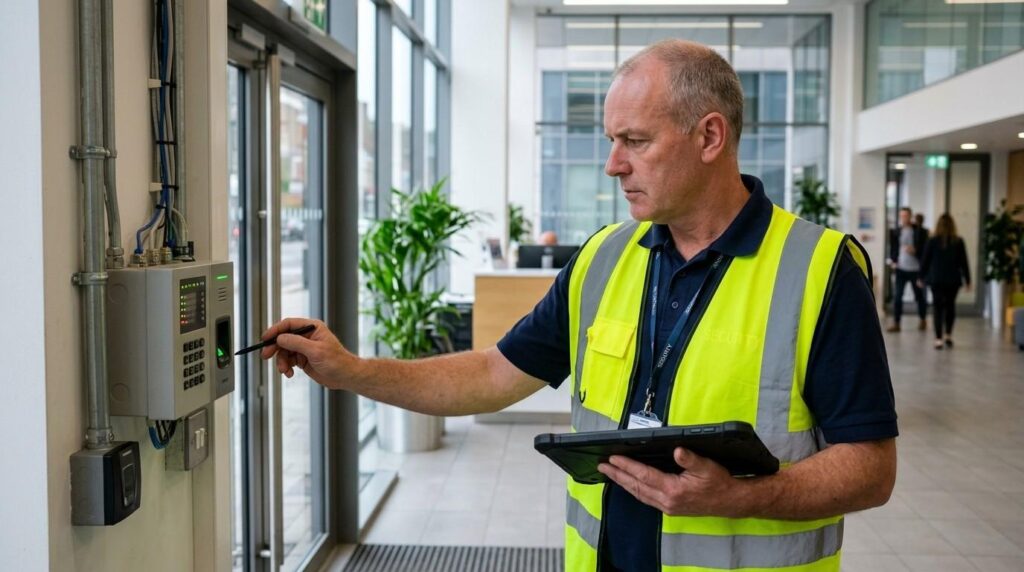
A security risk assessment is essential for any UK business looking to protect its people, property and operations. From offices and warehouses to retail sites and construction projects, physical threats such as theft, unauthorised access and vandalism remain a constant concern.
A structured security risk assessment helps organisations identify potential vulnerabilities within their physical infrastructure and evaluate how effective their existing security measures are. It involves examining access points, security systems and operating procedures to uncover weaknesses before they lead to a security incident.
Conducting a risk assessment is key to maintaining compliance with industry regulations, as it helps identify gaps in required security controls and protocols. For many organisations, it also supports insurance requirements and demonstrates a clear commitment to regulatory compliance.
A comprehensive security risk assessment acts as a roadmap to address vulnerabilities and demonstrate adherence to legal obligations and certification standards. By taking a proactive approach, businesses can strengthen their overall security posture, reduce risk exposure and make informed decisions about security investments.
What Is a Physical Security Risk Assessment?
A physical security risk assessment is a structured process used to evaluate how well an organisation’s physical security measures protect its assets, people and premises. It focuses on identifying vulnerabilities in physical infrastructure and assessing the likelihood and impact of potential threats.
A physical security assessment is a comprehensive evaluation of an organisation’s physical security measures and infrastructure, aimed at identifying potential vulnerabilities and threats to a building. This involves examining physical structures, access control systems, surveillance coverage, alarm systems and other security devices.
Understanding Risk in Physical Security
At the core of any security risk assessment is a simple principle used in risk analysis:
Risk = Threat + Vulnerability + Consequence
This approach allows organisations to assess identified threats in relation to existing security controls and understand their potential impact on business operations.
What a Physical Security Risk Assessment Involves
A physical risk assessment for security should include a systematic evaluation of a facility’s physical spaces, access points, security controls, procedures and likely threat paths to determine where vulnerabilities exist. This includes reviewing access logs, inspecting entry points and identifying weaknesses in existing controls.
The first step in a physical security risk assessment is to inspect facilities and sites to evaluate existing physical security controls, such as access control systems and surveillance cameras, while identifying potential vulnerabilities. This forms the foundation for a comprehensive assessment.
How it Helps in Designing a Security Plan
By identifying vulnerabilities and assessing existing security measures, physical security risk assessments allow organisations to enhance their overall physical security and reduce exposure to potential security breaches.
Physical security audits often reveal weaknesses in access control measures, such as poorly managed visitor handling and insufficient credential management, which can compromise overall security. These insights help security teams implement stronger security measures and improve their overall security posture.
A frequent vulnerability in physical security is the mismatch between documented security policies and actual practices, leading to gaps in security measures that can be exploited. Reviewing operating procedures is therefore a critical part of any physical security audit.
Why Physical Security Risk Assessments Are Essential for UK Businesses
A security risk assessment plays a central role in protecting UK businesses against a wide range of physical threats. As organisations expand operations, manage multiple sites or handle sensitive assets, the need for a structured and repeatable risk assessment process becomes increasingly important.
Rising Physical Threats Across UK Industries
Businesses today face a combination of internal and external security risks. External threats include theft, trespassing, vandalism and organised criminal activity, while internal risks may involve negligence, insider threats or poor adherence to security policies.
A physical security risk assessment enables organisations to identify potential threats early and assess how these risks interact with their existing security measures. This form of threat modelling helps security teams understand real world threats and develop appropriate security strategies to mitigate risks effectively.
Supporting Regulatory Compliance and Legal Obligations
In the UK, organisations are expected to demonstrate a duty of care towards employees, visitors and contractors. Conducting a risk assessment is key to maintaining compliance with industry regulations and security trends, as it helps identify gaps in required security controls and protocols.
A comprehensive security risk assessment acts as a roadmap to address vulnerabilities and demonstrate adherence to legal obligations and certification standards. It also ensures that organisations can provide evidence of due diligence in the event of a security incident or audit.
Regular security risk assessments are essential for organisations to proactively reduce risks and ensure compliance, safeguarding them from potential legal and financial repercussions. This is particularly important in sectors where regulatory oversight is strict, such as construction, logistics and retail.
Protecting Critical Assets and Business Continuity
Every organisation has critical assets that must be protected. These may include physical stock, specialised equipment, sensitive assets or restricted areas within a facility. A security risk assessment helps identify these assets and evaluate the level of protection required.
Physical risk assessments provide decision-makers with data-driven insights that help them strategically allocate resources to safeguard critical company assets. This ensures that security investments are directed towards areas with the highest risk exposure.
By identifying vulnerabilities and assessing existing security measures, organisations can strengthen their overall security posture and reduce the likelihood of security breaches. This proactive approach is essential for maintaining business continuity and avoiding operational disruption.
Improving Security Systems and Procedures
A physical security assessment does more than highlight weaknesses. It also evaluates the effectiveness of existing security systems, including access control systems, surveillance equipment and alarm systems.
Auditing existing physical security systems includes documenting current access control measures and evaluating system performance to identify gaps and weaknesses that may lead to security threats. This process helps organisations identify weaknesses in both technology and procedures.
Reviewing operating procedures is crucial to uncover vulnerabilities in policies and protocols, which can help diagnose areas where human error or miscommunication may create security risks. This ensures that security teams and personnel are aligned with established procedures.
Driving Smarter Security Investments
One of the key benefits of a security risk assessment is its ability to guide investment decisions. Rather than relying on assumptions, organisations can base their security strategies on actual risk data.
Regular assessments help organisations make informed decisions about security investments, leading to cost-effective solutions that protect against potential threats. This prevents unnecessary spending while ensuring that critical vulnerabilities are addressed.
Conducting physical risk assessments enables organisations to implement targeted strategies for risk mitigation, enhancing overall security and ensuring regulatory compliance. It also supports long-term planning by aligning security measures with business growth.
Adapting to Evolving Risks
Security risks are not static. Changes in operations, staffing, site layout or external conditions can introduce new vulnerabilities. Organisations must continuously evaluate their physical security measures to adapt to new threats and changes within the organisation.
Regular physical security risk assessments help organisations identify gaps in their security measures and take steps to address and improve them, thereby reducing the risk of security breaches. This ongoing process ensures that the organisation maintains a secure environment over time.
Key Steps to Conduct a Physical Security Risk Assessment
A structured risk assessment follows a clear process. Each step builds on the previous one, ensuring a comprehensive assessment of physical security measures, existing controls and potential vulnerabilities across the organisation.
1. Identify Critical Assets and Systems
The starting point of any security risk assessment is to identify assets that require protection. These include physical assets such as equipment, stock and vehicles, as well as sensitive assets like restricted areas or locations storing sensitive data in physical form.
This stage involves examining the organisation’s physical infrastructure and identifying areas where loss, damage or disruption would have the greatest impact. Facility owners and security leaders must work together to map out critical assets and understand their value.
Identifying risk factors involves evaluating business operations and potential threats, which helps prioritise risks and develop tailored strategies for enhancing physical security measures. This step ensures that resources are focused on areas with the highest risk exposure.
2. Identify Threats and Assess Physical Security Risk
Once assets are identified, the next step is to identify potential threats and assess the level of risk they pose. These threats may include unauthorised access, theft, vandalism, workplace violence or environmental hazards such as natural disasters.
A security risk assessment involves examining how identified threats interact with existing security controls. This process of risk analysis helps organisations understand where their security posture may be vulnerable.
Threat modelling plays a key role here. By analysing real world threats and identifying vulnerabilities, organisations can assess potential risks and determine which scenarios are most likely to result in a security incident.
3. Inspect Premises and Review Access Control

A detailed inspection of the site is essential in any physical security risk assessment. This includes evaluating entry and exit points, access points, perimeter security and internal movement within the premises.
Access control systems should be reviewed carefully to ensure they are functioning effectively. This includes checking how individuals gain access, how credentials are managed and whether access logs are properly maintained.
Physical security audits often reveal weaknesses in access control measures, such as poorly managed visitor handling and insufficient credential management, which can compromise overall security. Identifying these issues early allows organisations to implement stronger security controls.
4. Audit Physical Security Systems and Conduct Testing
A security risk assessment must include a detailed audit of all physical security systems. This includes security cameras, alarm systems, lighting and other security devices used to monitor and protect the site.
Auditing existing physical security systems includes documenting current access control measures and evaluating system performance to identify gaps and weaknesses that may lead to security threats. Testing these systems ensures they perform effectively under real conditions.
Common vulnerabilities identified during physical security assessments include unauthorised access points, inadequate surveillance coverage, and ineffective alarm systems, which can lead to security breaches. Addressing these vulnerabilities is essential for strengthening the organisation’s overall security posture.
5. Review Operating Procedures and Staff Readiness
Security measures are only as effective as the people implementing them. A security risk assessment must therefore include a review of operating procedures and staff readiness.
Reviewing operating procedures is crucial to uncover vulnerabilities in policies and protocols, which can help diagnose areas where human error or miscommunication may create security risks. This includes examining emergency response plans, incident reporting processes and escalation procedures.
A frequent vulnerability in physical security is the mismatch between documented security policies and actual practices, leading to gaps in security measures that can be exploited. Ensuring alignment between policy and practice is critical for effective risk mitigation.
6. Evaluate Environmental and External Risks
The final step in a physical security risk assessment is to assess specific physical security risks by examining site layout, access points and potential for natural disasters, which informs strategic security efforts.
Environmental risks such as flooding, fire or severe weather conditions can significantly impact physical structures and disrupt operations. These risks must be included in the overall risk assessment to ensure a comprehensive evaluation.
A well-rounded risk assessment considers both internal and external risk factors, ensuring that all potential vulnerabilities are addressed and appropriate mitigation strategies are in place.
Physical Security Risk Assessment Checklist (UK Businesses)
A well-structured checklist is a practical tool within any security risk assessment. It ensures that no aspect of physical security is overlooked and provides a consistent framework for evaluating security measures across different sites.
A physical security audit checklist supports a comprehensive evaluation of existing security controls, helping organisations identify weaknesses, standardise processes and improve their overall security posture.
Perimeter Security
The outer boundary of a site is the first line of defence. Weak perimeter security increases the likelihood of unauthorised access and exposes the organisation to physical threats.
A security risk assessment should include:
- Condition and height of fencing and barriers
- Security of gates and entry points
- Perimeter lighting coverage and visibility
- Presence and positioning of security cameras
- Monitoring of access points after business hours
Identifying vulnerabilities at the perimeter helps reduce risk exposure before threats can reach critical areas. Poor lighting or unsecured access points are common security gaps that can be easily exploited.
Building and Premises Security

Once inside the perimeter, the focus shifts to securing the building itself. This includes doors, windows and internal movement throughout the facility.
A physical risk assessment should evaluate:
- Door and window locking mechanisms
- Reception areas and visitor management processes
- Internal access restrictions to sensitive areas
- Signage and physical barriers within the premises
- Monitoring of movement between different zones
Physical security audits often highlight gaps in how visitors gain access to buildings, particularly where processes are informal or not consistently followed. Strengthening these controls is essential for maintaining a secure environment.
Access Control Systems
Access control is a core component of any risk assessment. It determines who can gain access, when and under what conditions.
Key areas to assess include:
- Effectiveness of the access control system
- Credential management and issuance processes
- Maintenance of access logs and audit trails
- Handling of lost or expired credentials
- Integration with other security systems
Weak access control measures can lead to significant security vulnerabilities. A detailed review helps ensure that only authorised individuals can access restricted areas.
Security Systems and Devices
Security systems form the backbone of physical security measures. These systems must be regularly tested and maintained to ensure they function as intended. Learn more in our guide on What Is a Security System and How Does It Work?, where we explain how CCTV, access control, alarms and security personnel work together to protect businesses.
A security risk assessment should cover:
- Coverage and quality of security cameras
- Functionality of alarm systems
- Reliability of motion detection and sensors
- Integration between different security devices
- Response procedures for system alerts
Common vulnerabilities identified during physical security assessments include unauthorised access points, inadequate surveillance coverage, and ineffective alarm systems, which can lead to security breaches. Regular testing is essential to avoid these issues.
Operating Procedures and Security Personnel
Even the most advanced security systems rely on effective procedures and trained personnel. This part of the checklist focuses on how security measures are implemented in practice.
Areas to review include:
- Clarity and consistency of security policies
- Staff training and awareness levels
- Incident reporting and escalation procedures
- Coordination between security teams and management
- Workplace violence prevention measures
Reviewing operating procedures is crucial to uncover vulnerabilities in policies and protocols, which can help identify weaknesses caused by human error or inconsistent practices.
Environmental and External Risks
A comprehensive risk assessment must also consider risks beyond human threats. Environmental factors can have a serious impact on physical security.
Checklist items include:
- Exposure to natural disasters such as flooding or fire
- Structural resilience of buildings and infrastructure
- Backup systems for power and critical operations
- Emergency response plans and evacuation procedures
The inclusion of environmental risks ensures that the assessment reflects real world conditions and supports long-term risk management.
Identifying Gaps and Prioritising Action
Once the checklist is completed, the next step is to analyse findings and identify gaps in existing security measures. This involves comparing current security controls against identified risks and determining where improvements are needed.
Regular physical security risk assessments help organisations identify gaps in their security measures and take steps to address and improve them, thereby reducing the risk of security breaches. This structured approach supports continuous improvement and strengthens the organisation’s overall security posture.
Strengthen Your Security with a Professional Site Assessment
A thorough risk assessment requires more than a checklist. It demands experience, attention to detail and a clear understanding of real world threats affecting UK businesses. While internal reviews can highlight basic issues, a professional physical assessment provides a deeper, more objective evaluation of your existing security measures, systems and procedures.
At Proforce Security, we work with organisations across the UK to deliver tailored physical security risk assessments that identify vulnerabilities, assess risk exposure and recommend practical solutions. From reviewing access control systems and security cameras to evaluating operating procedures and security personnel, our team helps strengthen your overall security posture.
Conducting physical security risk assessments enables organisations to implement targeted strategies for risk mitigation, enhancing overall security and ensuring regulatory compliance. With the right expertise, you can move beyond identifying risks and take confident steps towards creating a secure environment that protects your people, premises and critical assets.
If you are looking to improve your security measures or address existing security gaps, now is the time to take action. A professional assessment will provide the clarity and direction needed to protect your business effectively. Contact us now to discuss the security needs of your business.


