
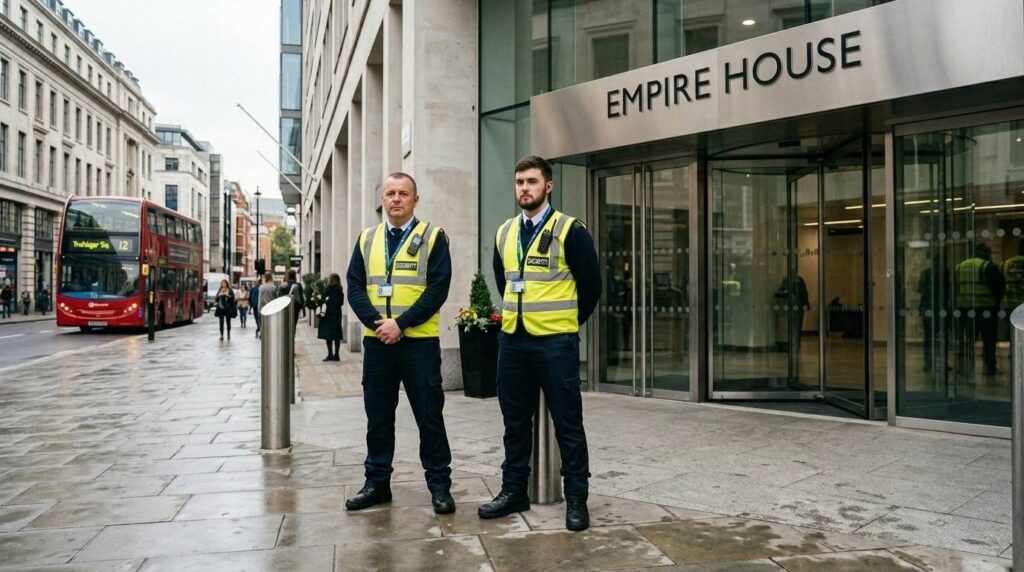
The UK security market has entered a period of rapid transformation. What was once a sector largely defined by static guarding and visible deterrence is now shaped by advanced technologies, integrated systems, and shifting risk profiles. For businesses across the UK, security is no longer a reactive measure. It is a vital part of operational resilience, customer confidence, and long-term growth.
Across the wider uk security industry, organisations are facing a more complex threat landscape. From physical risks such as theft, vandalism, and terrorism, to digital threats including ransomware attacks and data breaches, the need for coordinated protection has never been greater. This has placed the security industry at the centre of business decision-making, rather than on the periphery.
For security companies and clients alike, the landscape is evolving quickly. Firms must develop new capabilities, invest in training and technology, and adapt to changing compliance requirements. Businesses, on the other hand, must become more informed buyers of security services, understanding not just what they need today, but what they will require in the coming years.
Against this backdrop, providers such as Proforce Security are working within a highly competitive and expanding sector, where quality, reliability, and adaptability are key differentiators. The ability to deliver tailored solutions, supported by trained teams and modern systems, is becoming essential in meeting the demands of the modern uk security market.
UK Security Industry Overview for Businesses
The UK security market is broad, complex, and continuously expanding. It encompasses a wide range of services, technologies, and specialist capabilities that support businesses, public sector organisations, and critical infrastructure across the country. Understanding its structure is essential for any organisation looking to invest in effective protection.
At its core, the UK security market can be divided into several key segments. Manned guarding remains one of the largest components, providing a visible presence across commercial premises, construction sites, retail environments, and events. Alongside this, mobile patrols and keyholding services offer flexible coverage for small businesses that require out-of-hours protection or rapid response in a cost-effective manner.
UK Security Market Size & Growth
The UK security market reached a turnover of $32 billion in 2024, with the physical security market expected to grow to about $12.9 billion by 2030. This level of growth reflects both rising demand and increased investment across the sector. It also highlights the expanding role of innovation, particularly in areas such as video surveillance, biometrics, and remote monitoring systems.
At the same time, the cybersecurity market in the UK is forecast to grow at 13% year on year through 2030, driven by high demand for services and cloud-based solutions. This reinforces the growing overlap between cyber security and physical protection, as organisations seek unified strategies to protect assets, people, and data by adopting modern security technology trends for UK businesses.
The UK market is also being reshaped by raised expectations. Customers, regulators, and insurers now demand higher standards of compliance, better reporting, and faster response times. At the same time, businesses are seeking efficiency, convenience, and scalable solutions that can adapt as their operations expand. This has led to a shift towards integrated security models that combine physical presence with digital infrastructure and cloud based solutions.
Sectors that Need Security Services
The demand for security services is driven by a range of sectors. Construction, logistics, retail, and corporate offices all require tailored protection strategies. In addition, public sector organisations and infrastructure projects represent a significant portion of the market, particularly as government investment continues to rise.
The UK government has allocated over $910 million for border infrastructure and technology to enhance border security, indicating significant investment in the security sector post-Brexit. This funding reflects a broader focus on national protection and highlights opportunities for firms operating within this space. The UK government allocated over $910 million for border infrastructure, technology, and new staff to ensure British border systems are fully operational at the end of the transition period through the Nationality and Borders Act. The 2023 Illegal Migration Act further indicates the UK government’s commitment to border security and the opportunities in this sector.
Financial State of UK Security Market
At the same time, the UK security industry operates within tight financial constraints. The UK security industry operates on extremely thin profit margins, making it challenging for firms to manage multiple contracts with varying service level agreements (SLAs) and compliance standards. This creates a highly competitive environment where efficiency, reliability, and innovation are essential for maintaining revenue and long-term client relationships.
Workforce dynamics also play a critical role. As of March 2024, the UK security industry employs approximately 450,000 SIA-licensed security officers, with a diverse workforce that includes a significant number of individuals on student visas, complicating compliance and workforce management. This highlights both the scale of the sector and the operational challenges that firms must navigate.
Overall, the UK security market is shaped by a combination of traditional services and emerging technologies. It is a sector defined by constant change, where businesses must balance cost, compliance, and performance while responding to evolving threats and customer expectations.
Key Growth Drivers in the UK Security Market
The UK security market is being shaped by a combination of economic pressure, technological innovation, and rising threat levels. These forces are not acting in isolation. Instead, they are driving structural change across the security industry, influencing how services are delivered, how businesses invest, and how protection strategies are designed.
Understanding these growth drivers is essential for organisations looking to align their security approach with the realities of the modern uk market.
Rising Risk Landscape and Threat Awareness

One of the most significant drivers of growth in the uk security market is the increasing awareness of risk. Businesses across sectors are facing a broader spectrum of threats, ranging from physical incidents such as theft and vandalism to more complex risks linked to terrorism and organised crime.
At the same time, cyber threats are intensifying. The rise in ransomware attacks and data breaches has made cyber security a board-level concern. Organisations are recognising that a failure in protection can result in financial loss, reputational damage, and operational disruption. This has led to increased demand for both physical and digital security solutions that can operate in tandem.
The convergence of these risks has pushed companies to invest more heavily in integrated systems that provide comprehensive protection across their premises and digital infrastructure.
Expansion of Digital Infrastructure and Technology Adoption
The rapid expansion of digital infrastructure, from IP surveillance cameras to biometric access control devices, is another key factor driving the UK security market. Businesses are increasingly reliant on connected systems, cloud platforms, and online services. While this creates opportunities for efficiency and growth, it also introduces new vulnerabilities.
The demand for surveillance systems in the UK is shifting from analog CCTV to IP surveillance systems, which include advanced equipment like facial recognition and smartphone integration. This shift reflects a broader move towards smarter, more responsive systems that can scale with business needs.
In addition, access control and identity management solutions are increasingly in demand in the uk security market to combat identity theft and enhance security across various sectors. These systems provide an added layer of protection while improving convenience for authorised users.
Changing Business Expectations and Operational Needs
Businesses themselves are also driving change within the uk security market. Organisations are no longer looking for basic guarding services alone. Instead, they expect tailored solutions that combine people, technology, and processes.
There is a growing focus on efficiency and measurable outcomes. Companies want to understand how their investment in security contributes to risk reduction, operational continuity, and customer confidence. This has led to increased demand for reporting, analytics, and performance tracking within security services.
Flexibility is another important factor. Security firms in the UK face operational challenges due to fluctuating site demands and last-minute cancellations of security officers, which can disrupt service delivery and contract fulfillment. As a result, businesses are seeking providers who can adapt quickly and maintain consistent service levels.
Workforce Dynamics and Talent Challenges
The availability of skilled personnel remains a critical issue within the uk security industry. While demand continues to rise, firms must compete for talent and invest in training to maintain standards.
The need for properly licensed and trained teams adds another layer of complexity. Screening, compliance, and ongoing development are essential for ensuring that security officers can operate effectively in a demanding environment. This has increased the importance of structured training programmes and workforce management systems.
At the same time, competition within the market is intensifying. Firms must balance cost pressures with the need to attract and retain skilled staff, all while maintaining high levels of service.
Growth Outlook and Market Expansion
Looking ahead, the UK security market is expected to continue expanding in the coming years. Increased demand, combined with ongoing investment in technology and infrastructure, will support sustained growth across the sector.
Physical and cyber security must collaborate with the adoption of advanced technologies to fit in the future landscape. For businesses, this means that security will remain a critical area of focus, requiring ongoing attention and strategic planning.
For providers, the challenge will be to innovate, scale, and deliver solutions that meet the evolving needs of their customers while navigating a competitive and complex environment.
Physical Security Trends in the UK
The UK security market is undergoing a clear shift in how physical protection is delivered. Traditional methods still play a role, but the wider security industry is moving towards a more integrated, technology-supported model. This evolution is being driven by cost pressures, rising expectations, and the need for greater efficiency across the uk market.
For businesses, physical security is no longer just about having a presence on site. It is about creating a system that can detect, respond, and adapt in real time. The following trends highlight how the UK security market is evolving in practice.
Shift from Traditional Guarding to Technology-Led Solutions
Manned guarding remains a core service within the uk security industry, but its role is changing. Businesses are moving away from relying solely on static guards and are instead adopting hybrid models that combine personnel with advanced technologies.
This shift is largely driven by the need to improve efficiency and reduce long-term costs. While guards provide a visible deterrent and immediate response capability, technology enhances their effectiveness. Systems such as video surveillance, motion detection, and remote monitoring allow for broader coverage and faster incident detection.
In the modern UK security market, guards are increasingly supported by digital tools that enable better reporting, communication, and control. This integration allows security teams to operate more effectively, particularly across large or complex premises.
Continued Demand for Core Physical Security Services
Despite the rise of technology, demand for traditional services remains strong. Manned guarding, mobile patrols, and keyholding continue to form the foundation of the security market.
Mobile patrols offer flexibility, allowing businesses to maintain protection without the cost of a full-time on-site presence. Keyholding and alarm response services provide reassurance that trained professionals can respond quickly to incidents, particularly outside of normal operating hours.
These services are particularly valuable for sectors such as construction, logistics, and retail, where risks can vary depending on time, location, and activity levels. As the uk security market expands, these core offerings continue to generate steady revenue for firms while supporting wider security strategies.
Growth of Integrated CCTV and Remote Monitoring
One of the most significant developments in the uk security market is the widespread adoption of integrated CCTV and remote monitoring systems. Businesses are increasingly investing in solutions that allow them to monitor their premises in real time, often from multiple locations.
The demand for surveillance systems in the UK is shifting from analog CCTV to IP surveillance systems, which include advanced functionalities like facial recognition and smartphone integration. These systems provide greater flexibility, improved image quality, and enhanced detection capabilities.
Remote monitoring centres play a key role in this ecosystem. By analysing live feeds and responding to alerts, they enable faster decision-making and reduce the need for constant on-site presence. This not only improves efficiency but also enhances overall protection.
In addition, cloud based solutions are making it easier for businesses to access data, review incidents, and manage their security systems remotely. This level of access and control is becoming a standard expectation within the uk security market.
Opportunities in Event and Infrastructure Security
The uk security market also presents significant opportunities in event and infrastructure security. Large-scale events, public gatherings, and major construction projects all require tailored protection strategies.
Event security involves managing crowd control, access points, and emergency response, often within a short timeframe. This requires well-trained teams, clear communication, and effective coordination with local authorities.
Infrastructure security, on the other hand, focuses on long-term protection of assets such as transport networks, utilities, and public facilities. These projects often involve complex systems and high levels of compliance, making them a key area of growth within the security industry.
Government investment continues to support this segment. The UK physical security market is projected to grow to about $12.9 billion by 2030, driven by increased threats and the integration of physical and digital security. This reflects the ongoing importance of protecting critical assets and maintaining public safety.
Regulatory and Compliance Landscape

The UK security market operates within a tightly regulated environment, where compliance is not optional but fundamental to delivering professional and reliable services. For businesses and providers alike, understanding regulatory requirements is essential for maintaining standards, avoiding penalties, and protecting reputation.
As the security industry evolves, regulation is also becoming more complex. It now extends beyond physical presence to include data protection, technology use, and operational accountability. This section outlines the key regulatory drivers shaping the uk security market today.
SIA Licensing and Industry Standards
At the centre of the uk security industry is the Security Industry Authority (SIA), which regulates the licensing of security personnel. Any individual working in roles such as manned guarding, door supervision, or CCTV operation must hold a valid SIA licence, and providers must stay aligned with recent SIA licence updates.
For businesses operating within the uk security market, this creates a clear baseline for quality and professionalism. It ensures that security officers have undergone appropriate training, background screening, and certification before being deployed on site.
However, maintaining compliance is not without its challenges. As of March 2024, the UK security industry employs approximately 450,000 SIA-licensed security officers, with a diverse workforce that includes a significant number of individuals on student visas, complicating compliance and workforce management. This places additional pressure on firms to manage licensing, renewals, and workforce planning effectively.
In a competitive market, companies that prioritise training, screening, and ongoing development, backed by recognised security accreditations and industry approvals, are better positioned to deliver consistent and reliable services.
Data Protection and GDPR Implications
Data protection is a central concern in the modern security industry, particularly as systems become more connected and data-driven. The use of cloud based solutions, remote monitoring, and digital reporting means that large volumes of sensitive information are being collected and processed.
Under UK GDPR regulations, organisations must ensure that personal data is handled securely, stored appropriately, and used only for legitimate purposes. This applies to everything from CCTV footage to access control records.
For businesses operating in the uk security market, this creates a dual responsibility. They must not only protect their physical premises but also safeguard the data generated by their security systems.
Public Sector Procurement and Compliance Expectations
Public sector contracts represent a significant opportunity within the uk security market, but they come with strict compliance requirements. Government frameworks often require detailed documentation, proven track records, and adherence to specific standards.
The UK government’s national security technology procurement strategy emphasises the need for commercial, off-the-shelf solutions from well-established suppliers that can be deployed quickly, suggesting opportunities for U.S. companies with a strong existing track record. This reflects a broader preference for reliability, scalability, and proven performance.
Operational and Compliance Challenges
While regulation supports quality and accountability, it also introduces operational complexity. The UK security industry operates on extremely thin profit margins, making it challenging for firms to manage multiple contracts with varying service level agreements (SLAs) and compliance standards.
In addition, security firms in the UK face operational challenges due to fluctuating site demands and last-minute cancellations of security officers, which can disrupt service delivery and contract fulfillment. These factors make it difficult to maintain consistency while meeting strict compliance requirements.
For businesses selecting a provider, this highlights the importance of choosing a company that has strong internal processes, reliable teams, and a clear focus on compliance. For providers, it underlines the need to invest in systems, training, and management structures that can support long-term growth within the uk security market.
Strengthen Your Security Strategy with Proforce Security
In a rapidly evolving UK security market, businesses cannot rely on outdated or fragmented protection models. Rising risks, tighter compliance requirements, and increasing dependence on technology mean security must now be proactive, integrated, and professionally managed.
At Proforce Security, we support organisations in London and across the UK with tailored protection solutions designed around real operational needs. Our approach combines trained personnel, modern systems, and compliance-led processes to deliver dependable coverage across a wide range of environments, from commercial premises to high-risk sites.
Whether you require manned guarding, mobile patrols, CCTV monitoring, or integrated security solutions, our team focuses on delivering consistency, reliability, and clear communication at every stage. We understand the pressures businesses face within the UK security market, from cost control to regulatory compliance, and we design our services to reduce risk while maintaining operational efficiency.
If you are looking to improve your security posture with a provider that understands both the physical and digital demands of today’s landscape, Proforce Security can provide detailed security analysis and customised plans for your organisation. Contact our UK security teamtoday to talk about your requirements and discover how we can help protect your business with confidence.


