
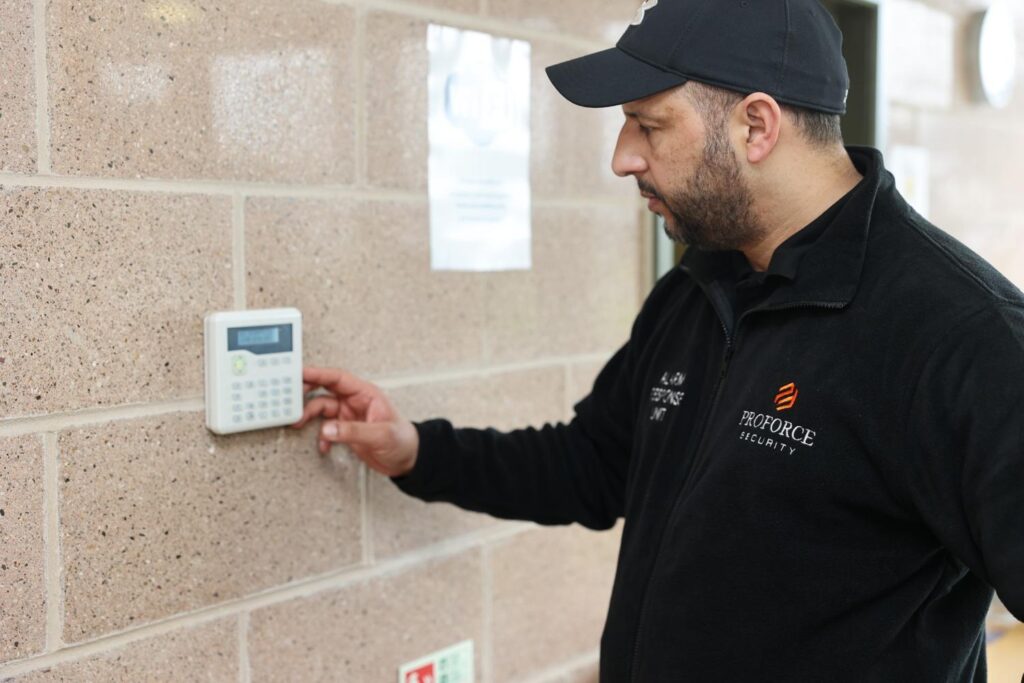
Business security across the UK is under constant pressure from evolving threats such as burglary, vandalism, and unauthorised access. Many organisations invest in an alarm system, yet without a structured alarm response plan, even the most advanced technology can fall short. The difference between minor disruption and significant loss often comes down to how quickly and effectively an alarm response is initiated.
For companies operating across commercial and industrial sectors, the expectation is not only to detect intrusion or fire risks but to act on them immediately. Alarm activations require more than alerts. They demand a coordinated, professional response that protects premises, assets, and people.
This is where alarm response services become essential. By combining alarm monitoring, trained security officers, and rapid response protocols, businesses can reduce exposure to risk while maintaining operational continuity. A structured approach ensures that every alert is treated seriously, verified, and acted upon without delay.
In the UK, professional providers such as Proforce Security deliver tailored alarm response solutions designed around each client’s risk profile, site requirements, and compliance needs.
What Are Alarm Response Security Services?
Alarm response services refer to the professional handling of alarm activations through monitoring, verification, and physical response. These services ensure that when an alarm is triggered, trained personnel are alerted immediately and take appropriate action on behalf of the property owner.
Alarm activation occurs when a sensor is triggered by an event such as an intruder, fire, or system fault. Once this happens, the alarm control panel sends a signal to an Alarm Receiving Centre (ARC) via broadband, mobile networks, or landlines. From there, the security alarm system response process begins.
Alarm response services operate 24/7, providing continuous monitoring and immediate action in the event of an alarm activation, which is crucial for both residential and commercial properties. These services typically include 24/7 monitoring, immediate assessment of alarm triggers, and coordination with emergency services if necessary.
A key part of this process is verification. Trained operators at the ARC assess the alert using visual verification via CCTV or sequential verification to confirm the threat. Immediate action protocols should treat every alarm as a real emergency and avoid assuming it is a false alarm.
Once verified, the ARC follows a pre-agreed protocol which may include dispatching a licensed security officer, contacting emergency services such as the police or fire brigade, and notifying keyholders.
The process of security alarm response follows a systematic cycle from initial detection to final resolution. This structured approach ensures that risks are managed effectively and that every incident is handled with consistency and accountability.
Utilising alarm response services can significantly reduce the risk of theft, vandalism, and property damage by providing a systematic and professional response to security alerts.
Why Timely Alarm Response Is Critical for Business Security

A well-installed alarm system is only as effective as the alarm response that follows. For UK businesses, the real risk does not begin when an alarm is triggered, but when there is no immediate or structured response in place. Timely alarm response ensures that threats are identified, verified, and managed before they develop into costly incidents.
The Real Cost of Delayed Response
When an alarm activation is not addressed quickly, the consequences can be severe. Intruders can gain access, remove valuable assets, and leave the premises before any action is taken. In cases of vandalism or forced entry, even a short delay can result in extensive damage to property and disruption to operations.
A slow alarm response increases exposure to:
- Theft and burglary
- Property damage and vandalism
- Loss of sensitive data or equipment
- Business interruption and downtime
The presence of a dedicated alarm response service significantly reduces the risk of theft, vandalism, and property damage by ensuring a timely and professional response to incidents. This is particularly important for businesses operating in warehouses, offices, retail environments, and industrial sites across the UK.
Immediate Action Protects People and Premises
An effective alarm response is not limited to protecting assets. It is also critical for ensuring the safety of employees, visitors, and anyone present on site. When an alarm is triggered, the situation must be treated as an emergency until proven otherwise.
In the case of fire-related incidents, response time becomes even more critical. Every alarm must be treated as a real fire emergency, with immediate evacuation without gathering personal belongings. A rapid alarm response ensures that emergency services such as the fire brigade are contacted without delay, helping to minimise risk to life and property.
Regular drills and training are essential for ensuring that occupants know evacuation routes and assembly points. However, without a reliable alarm response process, the initial alert may not be managed efficiently, increasing the level of risk.
The Role of Professional Security Officers
Alarm response services rely on trained security officers who are capable of assessing and managing a wide range of situations. These professionals are responsible for attending the site, investigating the cause of the alarm, and taking appropriate action to secure the premises.
Professional security teams are essential for managing alarm responses, as they are trained to assess threats and secure premises effectively during emergencies. Their role includes:
- Investigating alarm activations
- Verifying whether a threat is genuine
- Securing access points and preventing further intrusion
- Reporting incidents and supporting follow-up actions
This structured approach ensures that every alarm response is handled with consistency, accountability, and professionalism.
Business Continuity and Operational Stability
From a commercial perspective, timely alarm response directly supports business continuity. A rapid response allows incidents to be contained quickly, reducing downtime and limiting financial impact.
When alarm response is delayed or poorly managed, businesses often face:
- Extended closures
- Repair and recovery costs
- Disruption to customers and operations
- Reputational damage
By contrast, a proactive alarm response service helps maintain stability. Issues are identified early, resolved efficiently, and documented for future review. This level of control is essential for businesses that rely on secure and uninterrupted operations.
A Proactive Approach to Risk Reduction
Timely alarm response is not simply reactive. It forms part of a wider risk management strategy that includes monitoring, verification, and continuous improvement. An effective alarm response plan prioritises immediate action, clear communication, and regular system verification to minimise risk to life and property.
An effective alarm response plan requires a defined, proactive approach including regular maintenance, clear procedures, and training. This ensures that both the alarm system and the response services operate as expected under real conditions.
Ultimately, alarm response is about more than reacting to alerts. It is about reducing risk, protecting assets, and ensuring that businesses remain secure, compliant, and operational at all times.
Why Timely Alarm Response Is Critical for Business Security
A well-installed alarm system is only as effective as the alarm response that follows. For UK businesses, the real risk does not begin when an alarm is triggered, but when there is no immediate or structured response in place. Timely alarm response ensures that threats are identified, verified, and managed before they develop into costly incidents.
The Real Cost of Delayed Response
When an alarm activation is not addressed quickly, the consequences can be severe. Intruders can gain access, remove valuable assets, and leave the premises before any action is taken. In cases of vandalism or forced entry, even a short delay can result in extensive damage to property and disruption to operations.
A slow alarm response increases exposure to:
- Theft and burglary
- Property damage and vandalism
- Loss of sensitive data or equipment
- Business interruption and downtime
The presence of a dedicated alarm response service significantly reduces the risk of theft, vandalism, and property damage by ensuring a timely and professional response to incidents. This is particularly important for businesses operating in warehouses, offices, retail environments, and industrial sites across the UK.
Immediate Action Protects People and Premises
An effective alarm response is not limited to protecting assets. It is also critical for ensuring the safety of employees, visitors, and anyone present on site. When an alarm is triggered, the situation must be treated as an emergency until proven otherwise.
In the case of fire-related incidents, response time becomes even more critical. Every alarm must be treated as a real fire emergency, with immediate evacuation without gathering personal belongings. A rapid alarm response ensures that emergency services such as the fire brigade are contacted without delay, helping to minimise risk to life and property.
Regular drills and training are essential for ensuring that occupants know evacuation routes and assembly points. However, without a reliable alarm response process, the initial alert may not be managed efficiently, increasing the level of risk.
The Role of Professional Security Officers
Alarm response services rely on trained security officers who are capable of assessing and managing a wide range of situations. These professionals are responsible for attending the site, investigating the cause of the alarm, and taking appropriate action to secure the premises.
Professional security teams are essential for managing alarm responses, as they are trained to assess threats and secure premises effectively during emergencies. Their role includes:
- Investigating alarm activations
- Verifying whether a threat is genuine
- Securing access points and preventing further intrusion
- Reporting incidents and supporting follow-up actions
This structured approach ensures that every alarm response is handled with consistency, accountability, and professionalism.
Business Continuity and Operational Stability
From a commercial perspective, timely alarm response directly supports business continuity. A rapid response allows incidents to be contained quickly, reducing downtime and limiting financial impact.
When alarm response is delayed or poorly managed, businesses often face:
- Extended closures
- Repair and recovery costs
- Disruption to customers and operations
- Reputational damage
By contrast, a proactive alarm response service helps maintain stability. Issues are identified early, resolved efficiently, and documented for future review. This level of control is essential for businesses that rely on secure and uninterrupted operations.
A Proactive Approach to Risk Reduction
Timely alarm response is not simply reactive. It forms part of a wider risk management strategy that includes monitoring, verification, and continuous improvement. An effective alarm response plan prioritises immediate action, clear communication, and regular system verification to minimise risk to life and property.
An effective alarm response plan requires a defined, proactive approach including regular maintenance, clear procedures, and training. This ensures that both the alarm system and the response services operate as expected under real conditions.
Ultimately, alarm response is about more than reacting to alerts. It is about reducing risk, protecting assets, and ensuring that businesses remain secure and operational and security systems stay compliant with government standards.
How Alarm Systems Integrate with Professional Response Services
For businesses across the UK, installing an alarm system is only the first step. The real strength of any security setup lies in how that system connects with a structured alarm response process. Integration ensures that when an alarm is triggered, the right people are alerted immediately and the appropriate action is taken without delay.
From Detection to Response: How the Process Works
An alarm system is designed to detect threats such as intrusion, fire, or unauthorised access. When a sensor is activated, the system initiates a signal that begins the alarm response cycle.
The alarm control panel sends a signal to an Alarm Receiving Centre (ARC) via broadband, mobile networks, or landlines. This connection ensures that every alarm activation is monitored in real time, regardless of whether the premises are occupied.
Once the signal reaches the ARC, trained operators begin the verification process. Trained operators at the ARC assess the alert using visual verification via CCTV or sequential verification to confirm the threat. This step is essential in distinguishing genuine incidents from false alarms, while still maintaining a cautious approach.
Immediate action protocols should treat every alarm as a real emergency and avoid assuming it is a false alarm. This ensures that no potential threat is overlooked during the early stages of alarm response.
Coordinated Action and Communication
Once an alarm has been verified, the ARC initiates a pre-agreed response plan. Once verified, the ARC follows a pre-agreed protocol which may include dispatching a licensed security officer, contacting emergency services, and notifying keyholders.
This coordinated approach ensures that all relevant parties are informed and that the situation is managed efficiently. Communication between monitoring teams, security officers, and emergency services is critical in maintaining control during an incident.
Alarm response services provide professional security monitoring for residential and commercial properties, ensuring rapid action in the event of an alarm activation. These services typically include 24/7 monitoring, immediate assessment of alarm triggers, and coordination with emergency services if necessary.
Continuous Monitoring and Rapid Response

One of the key advantages of integrated alarm response services is continuous monitoring. Alarm response services operate 24/7, providing continuous monitoring and immediate action in the event of an alarm activation, which is crucial for both residential and commercial properties.
This constant oversight means that businesses don’t need to rely on internal staff to manage response alarms. Instead, a dedicated team handles every alert, ensuring consistency and professionalism at all times.
The ability to respond quickly is what sets key holding and alarm response services apart. Whether the issue involves a security breach, a fire risk, or a system fault, the response is immediate, structured, and aligned with the specific needs of the site.
Reducing Business Risk, Insurance Costs & Legal Liability
For UK businesses, security is not only about preventing crime. It also plays a direct role in financial exposure, insurance requirements, and legal responsibility. A structured alarm response approach significantly reduces operational risk by ensuring that every alarm activation is managed quickly, professionally, and in line with agreed procedures.
Reducing Physical and Financial Risk Exposure
A reliable alarm response framework helps businesses minimise the impact of security incidents before they escalate. When an alarm system is triggered, the speed and quality of response determine whether the situation remains contained or develops into a major loss event.
Alarm activation occurs when a sensor is triggered by an event such as an intruder, fire, or system fault. Without immediate action, the risk of burglary, vandalism, or property damage increases significantly.
A professional alarm response service ensures that every alert is treated seriously, verified, and acted upon. This reduces exposure to:
- Theft and burglary
- Deliberate vandalism
- Fire-related damage
- Equipment and data loss
- Operational disruption
The presence of a dedicated alarm response service significantly reduces the risk of theft, vandalism, and property damage by ensuring a timely and professional response to incidents.
Insurance Compliance and Premium Benefits
Insurance providers increasingly expect businesses to demonstrate strong security controls as part of their risk profile. A monitored alarm system combined with professional alarm response services can directly support compliance with policy conditions.
When insurers assess a property, they consider how quickly an incident will be detected, verified, and addressed. A connected alarm monitoring service with structured response procedures shows that risks are actively managed rather than left unattended.
This can lead to:
- Improved insurance eligibility
- Reduced premium costs
- Fewer disputes during claims
- Stronger evidence in incident investigations
NSI approved keyholding companies operate to British Standards for keyholding (BS 7984) and employ security screened, SIA licensed officers who are fully trained to handle emergencies. This level of accreditation provides reassurance to insurers that the site is protected by fully accredited processes and trained personnel.
Legal Responsibility and Duty of Care
Businesses have a legal duty of care to protect employees, visitors, and assets. Failure to implement appropriate security measures can expose organisations to liability in the event of an incident.
An effective alarm response plan requires a defined, proactive approach including regular maintenance, clear procedures, and training. This ensures that organisations can demonstrate due diligence in managing foreseeable risks.
In the event of a security breach or emergency, documented alarm response procedures help demonstrate that appropriate steps were taken. This is particularly important in cases involving workplace safety, fire incidents, or criminal investigations.
The Role of Keyholding and Emergency Access
Keyholding services play a critical role in reducing both risk and liability. Key holding services in the UK involve holding a set of keys to a property and responding to alarm activations, ensuring the premises are secure in the owner’s absence.
This removes the need for internal staff to attend potentially dangerous situations, reducing personal risk and liability exposure. In emergency situations, trained personnel can access the site safely and efficiently, supporting both investigation and containment.
Using a professional keyholding service can provide peace of mind, as trained personnel can respond to emergencies such as burglaries or fires on behalf of the property owner.
Domestic keyholders should typically be able to reach the property within 20 minutes after being notified by the ARC. In commercial settings, this rapid attendance can also be supported through emergency lock and unlock services, helping ensure that threats are addressed before further damage occurs.
Measuring ROI: How Alarm Response Services Save Money
For many UK businesses, security is often viewed as a cost centre rather than a value driver. However, when properly implemented, a structured alarm response strategy delivers measurable return on investment by reducing direct losses, preventing disruption, and improving operational efficiency.
Understanding the financial value of alarm response requires looking beyond installation costs and focusing on avoided losses, reduced downtime, and improved risk control.
Reducing Operational Downtime
One of the most overlooked financial impacts of security incidents is downtime. Even when physical damage is minimal, businesses often face delays in reopening premises, restoring systems, or resuming operations. A professional alarm response service helps reduce downtime by ensuring incidents are:
- Identified quickly through monitoring
- Verified without delay
- Managed by trained personnel
- Resolved in a controlled manner
Alarm response services operate 24/7, providing continuous monitoring and immediate action in the event of an alarm activation, which is crucial for both residential and commercial properties. This continuous coverage ensures that incidents are addressed regardless of time or staffing levels.
Faster resolution means businesses can return to normal operations more quickly, reducing lost revenue and minimising disruption to customers and supply chains.
Lowering Long-Term Security Costs
While alarm response services require investment, they often reduce overall security expenditure in the long term. This is achieved through fewer incidents, reduced damage severity, and improved prevention.
Regular testing and maintenance of alarm systems by qualified professionals is necessary to ensure functionality. When systems are properly maintained and supported by professional response services, false alarms and system failures are reduced, improving efficiency and lowering unnecessary callouts.
In addition, insurers often recognise businesses that invest in monitored security and structured response systems, which can contribute to more favourable risk assessments over time.
Reducing Insurance Claims and Premium Pressure
Insurance costs are directly influenced by a business’s risk profile. Properties with weak or unmonitored security systems are often considered higher risk, resulting in increased premiums or stricter conditions.
A monitored alarm system supported by alarm response security services demonstrates proactive risk management. This can lead to:
- Fewer insurance claims
- Improved claim outcomes
- More stable premium pricing
- Stronger compliance with insurer requirements
NSI approved keyholding companies operate to British Standards for keyholding (BS 7984) and employ security screened, SIA licensed officers who are fully trained to handle emergencies. This level of professionalism strengthens a company’s security posture in the eyes of insurers and auditors.
Protect Your Business with Professional Alarm Response Services
Security incidents rarely give warning, and when they occur, every minute matters. A reliable alarm response system ensures that threats are not only detected but dealt with quickly, professionally, and with minimal disruption to your operations.
At Proforce Security, we provide structured alarm response and keyholding services designed to reduce risk, property protection, and support business continuity across the UK. From rapid deployment of trained security officers to 24/7 monitoring and keyholding support, our approach is built around speed, accuracy, and accountability.
If your business depends on uninterrupted operations, don’t wait. Now is the time to strengthen your response strategy and raise your protection level. Contact Proforce Security to discuss an alarm response that matches your security needs, site survey, risk profile, and operational requirements.


