
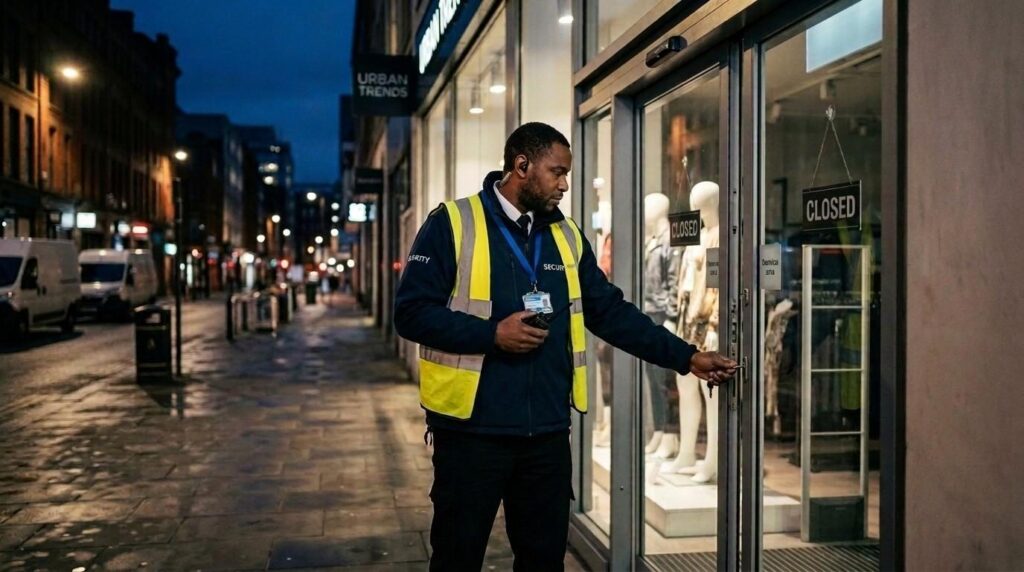
Running a successful retail business depends on more than great customer service and well-stocked shelves. Every business day begins and ends with a series of critical security tasks that protect staff, customers, cash, stock, and the premises. A well-planned retail checklist helps ensure these responsibilities are completed consistently while reducing opportunities for theft, accidents, and costly mistakes.
The periods surrounding store opening and closing are widely recognised as some of the highest-risk times for any retail store. Employees are handling the daily cash float, preparing the cash drawer, unlocking entrances, securing valuable stock, and managing access to the building. Criminals are often aware of these routines, making it essential to follow standardised opening and closing procedures that minimise unnecessary risks.
For retailers across the UK, a retail store operations checklist provides far more than operational guidance. It establishes accountability, improves communication between teams, and supports compliance with internal policies. When staff know exactly what is expected during store opening and closing, they can focus on serving customers rather than worrying whether an important task has been overlooked.
This guide outlines a practical retail store opening and closing security checklist that combines security, safety, cash management, and retail operations into one structured routine. Whether you manage a single shop or multiple locations, following these proven procedures from Proforce Security can protect your business while creating a consistent experience for employees and customers alike.
Why Every Retail Store Needs a Daily Security Checklist
A structured retail store opening and closing checklist creates a repeatable process that protects people, property, and profits throughout every business day.
Increasing Crime in Retail Industry
The need for better security has never been greater with heightened rates of retail crime. Retail theft incidents rose 19% from 2023 to 2024. At the same time, Retail theft losses reached $94.5 billion in 2021. Read our latest analysis of UK crime trends to understand how shoplifting and burglary are evolving in 2026.
The importance of store opening and closing extends beyond simply unlocking and locking the doors. These periods involve some of the most sensitive activities within retail operations, including cash management, preparing the POS system, verifying the daily cash float, checking surveillance cameras, inspecting alarm systems, and securing valuable stock. Without a documented checklist, it becomes easier for essential tasks to be forgotten, particularly during busy trading periods or staff absences.
Operation Efficiency and Employee Wellbeing
Opening and closing procedures are critical for operational efficiency. They provide a clear framework for store managers and employees to follow, ensuring every department begins and ends the day in the correct condition. From the sales floor and fitting rooms to the stockroom and checkout counter, each area requires attention before customers arrive and after they leave.
Security is not only about preventing crime. Employee wellbeing also depends on structured processes of store opening and closing. Occupational injuries in retail increased by 37% from 2017 to 2021. Many of these incidents can be reduced through consistent safety inspections, hazard reporting, and clear responsibilities during daily operations.
Whether identifying broken windows, checking for potential safety hazards, or ensuring all the doors are functioning correctly, every task contributes to a safer workplace.
Accountability, Communication and Written Record
One of the greatest advantages of a retail store operations checklist is improved accountability. Assigning tasks to specific roles improves accountability in checklists. Rather than relying on individuals to remember all the tasks, responsibilities are distributed among team members according to their role. This reduces duplication, improves communication, and ensures no critical security measure is overlooked during store opening and closing.
A documented checklist also strengthens communication between shifts. A checklist improves communication between closing and opening staff. Any maintenance issues, safety hazards, inventory shortages, suspicious incidents, or equipment faults identified during the closing checklist can be recorded for the morning team. Likewise, opening staff can verify that outstanding issues have been resolved before the store becomes busy.
Consistency and Archive Keeping
Consistency is another major benefit. Creating a standardised checklist is crucial for maintaining security, while a well-designed checklist improves consistency and reduces missed tasks. Retailers that standardise their daily tasks are better equipped to maintain service quality, protect assets, and respond effectively when unexpected situations arise.
Modern retailers are increasingly replacing paper forms with digital systems. Digital platforms are recommended for checklists to improve visibility. A digital checklist allows store managers to assign tasks, monitor completion, identify trends, and keep procedures up to date across multiple locations. Many businesses also integrate task management tools with sales reports and traffic tracking software to gain greater visibility into daily operations.
Regular Reviews of Opening and Closing Procedures
Regular reviews are equally important. Checklists should be reviewed and updated whenever procedures change. Whether new alarm systems are installed, layouts are modified, or legislation changes, the checklist should reflect current working practices.
Ultimately, store opening and closing should never be treated as routine administrative work. They represent the foundation of effective retail security. A comprehensive retail store opening and closing checklist ensures staff follow the correct procedures every day, reduces avoidable risks, supports better decision-making, and helps create a secure environment for employees and customers.
Retail Opening Checklist for A Smooth and Safe Start
The success of every trading day begins long before the first customer enters the premises. A carefully planned retail store opening and closing checklist ensures that security, safety, and operational checks are completed in the correct order. Rather than rushing to unlock the doors, employees should follow a structured retail store opening checklist that prepares the premises, protects staff, and reduces unnecessary risks.
Inspection of premises before opening is essential for safety. A consistent routine helps identify issues before they become serious problems while ensuring the retail store is fully prepared for another business day.

Conduct an Exterior Security Inspection Before Entering
The first stage of any store opening and closing routine should begin outside the building. Employees should never enter the premises immediately after arriving. Instead, they should carry out a visual inspection of the exterior to identify anything unusual.
Check for signs of forced entry before opening the store. Damaged locks, broken windows, graffiti, tampered alarm boxes, suspicious vehicles, or unsecured delivery entrances may indicate a break in or attempted intrusion overnight. If anything appears out of place, staff should avoid entering the building and immediately report the situation to management or the relevant security provider.
This simple inspection forms one of the most important checklist items because it protects employees from unknowingly walking into an unsafe environment. It also allows incidents to be reported quickly, preserving evidence for police or insurance purposes if required.
Follow the Two-Person Rule for Safe Store Entry
No employee should enter the premises alone when opening the business.
Two staff members should be present when opening the store. This long-standing security practice reduces personal safety risks while providing witnesses if any security incident occurs. Having two authorised employees present also improves accountability during store opening and closing, particularly when alarm systems are disarmed, keys are used, or valuable stock is accessed.
Once the exterior inspection has been completed, staff should unlock only the authorised entrance, enter cautiously, and disarm the security system according to company procedures. If the alarm fails to respond correctly or any unexpected warning messages appear, the building should be secured immediately until the issue has been investigated.
Retailers that operate key holding or lock and unlock services often rely on professional security officers to carry out this process, reducing risk for employees during high-risk opening periods.
Carry Out a Safety Inspection Throughout the Store
Perform a safety inspection to identify potential hazards. This includes checking emergency exits, stairways, fire escape routes, lighting, electrical equipment, storage areas, and any locations where slips, trips, or falls could occur. Any safety hazards should be reported and resolved before opening the doors to the public.
The sales floor, checkout counter, fitting rooms, staff facilities, and stockroom should all be included in this inspection of store opening and closing. Employees should also confirm that all the doors open and close correctly, emergency exits remain unobstructed, and surveillance cameras have not been tampered with overnight.
Activate Store Systems and Essential Equipment
Once the building has been confirmed as secure, attention can turn to preparing the store for daily operations. Essential opening tasks include securing the premises and initialising POS systems. Staff should turn on all electronics, including the POS system, sale system terminals, cash registers, payment devices, communication equipment, and surveillance cameras before customers arrive.
Lighting, air conditioning, digital displays, promotional materials, and other store equipment should also be activated. Ensuring that every system is functioning correctly before opening prevents unnecessary disruption later in the day and supports a better customer experience.
A quick test of the security system in store opening and closing should also confirm that alarm systems have been correctly disarmed while CCTV equipment continues recording as expected.
Verify Cash Float and Prepare the Checkout Counter
Cash management begins as soon as the store opens.
The opening team should verify the daily cash float for every cash drawer before serving customers. The amount should match company records, and any discrepancies must be investigated immediately rather than being discovered during closing procedures.
Employees should inspect the checkout counter, confirm that payment terminals are working correctly, and ensure receipt printers, scanners, and card readers are operational. These simple checks save time later in the day and help prevent unnecessary interruptions during busy trading periods.
Accurate cash management at the beginning of the day also makes it much easier to reconcile sales reports and previous night’s deposits during the closing checklist.
Confirm Stock Levels and Prepare the Sales Floor
Before welcoming customers, store managers should ensure the retail store is fully prepared for trading.
Ensure shelves are stocked and inventory is verified daily. Empty displays, missing products, or inaccurate inventory records can lead to lost sales and poor customer satisfaction. Employees should restock shelves where necessary, verify more stock is available in the stockroom, and ensure window displays remain clean, attractive, and up to date.
Visual merchandising should also be reviewed to confirm promotional materials are correctly displayed and seasonal campaigns have been implemented as planned. Taking a few extra minutes during store opening and closing to prepare the sales floor helps create a positive first impression while supporting stronger sales performance throughout the day.
Hold a Team Huddle Before Opening
A brief meeting before customers arrive helps bring the entire team together.
Conduct a team huddle to motivate staff before opening. This meeting provides an opportunity to assign tasks, discuss sales targets, review industry trends, highlight expected deliveries, identify security concerns, and communicate any updates from the previous business day.
Store managers can also review staffing levels, allocate responsibilities for essential tasks, and remind employees about current opening and closing procedures. This improves accountability while ensuring everyone understands their responsibilities before trading begins.
Daily communication of store opening and closing also contributes to smoother retail operations because employees know exactly which following tasks they are responsible for throughout the day.
Why a Consistent Opening Routine Matters
A structured retail store opening checklist does far more than prepare a business for customers. It strengthens security, improves operational efficiency, and creates a safer workplace by ensuring every critical task is completed in the correct order, especially when combined with a small business security strategy on a budget that addresses wider risks.
When opening routines become consistent, employees are less likely to overlook security checks, cash handling procedures, or safety inspections. Combined with a comprehensive retail store opening and closing checklist, these daily processes help protect people, stock, equipment, and the reputation of the retail business while laying the foundation for a successful trading day.
Closing Security Checklist for Retail Stores
Closing a retail store is far more than switching off the lights and locking the doors. The final hour of trading involves some of the most sensitive security activities of the day, from cash handling and customer management to securing valuable stock and activating the security system. A detailed retail store opening and closing checklist ensures that every member of staff follows the same process, reducing the likelihood of theft, operational errors, or safety incidents.
Well-planned store opening and closing routines help protect employees, improve accountability, and prepare the premises for the next business day. By following a structured retail store closing checklist, retailers can leave the premises confident that the building is secure and ready to reopen.

Prepare the Store Before Closing Time
Effective closing procedures begin before the doors officially close. Staff should avoid leaving all essential tasks until the last few minutes, as this increases the risk of mistakes.
Make an announcement 15 minutes before closing time. This politely informs customers that the store will be closing shortly and gives them enough time to complete their purchases. It also allows employees to begin preparing different areas of the store without disrupting the customer experience.
During this period, staff should monitor remaining customers, discourage new visitors from entering where appropriate, and begin organising the checkout counter for the end-of-day routine.
Preparing early makes the overall store closing procedures more organised while helping employees complete all the tasks without unnecessary pressure.
Clear the Sales Floor and Secure Customer Areas
Once closing time arrives, attention should shift to ensuring that every customer has safely left the premises.
Closing procedures include clearing the sales floor and locking down the building. Employees should politely guide remaining customers towards the exits while checking all public areas before beginning security checks.
Special attention should be given to fitting rooms, toilets, changing areas, consultation spaces, and quiet corners during store opening and closing where someone could remain unnoticed. Staff should also confirm that delivery entrances and staff-only access points are clear before continuing with the closing checklist.
At the same time, employees should restock items from checkout and fitting rooms before closing. Returning abandoned products to the correct shelves helps improve store presentation and reduces unnecessary work during the next retail store opening.
These daily tasks not only improve operational efficiency but also ensure the sales floor is store ready for the following morning.
Complete Cash Management and POS Reconciliation
Cash handling remains one of the highest-risk elements of store opening and closing, making consistency essential.
Cash management includes counting cash and reconciling sales reports. Each POS system should be closed according to company policy before staff begin balancing the tills.
Count cash in register drawers at closing time. Every cash drawer should be reconciled against electronic transactions and daily sales records. Any differences should be investigated immediately and documented before employees leave the premises.
In addition, Daily sales reports should be reviewed as part of closing procedures. Reviewing sales reports allows store managers to identify unusual transactions, monitor sales performance, verify sales targets, and identify trends that may influence staffing or stock decisions in future.
Where cash banking is required, previous night’s deposits should be prepared using secure procedures. Deposit bags should be sealed correctly, recorded accurately, and transferred according to company policy to maintain a clear chain of responsibility.
Standardised processes are particularly important because Standardised procedures are recommended due to high-risk times for cash handling. Consistent documentation reduces errors while protecting both employees and the retail business.
Switch Off Equipment and Secure Store Assets
Before locking the premises, employees should ensure that the building is left in a safe and energy-efficient condition.
Turn off all store equipment before leaving. Lighting that is not connected to security systems, electronic displays, office equipment, printers, music systems, and unnecessary appliances should be switched off to reduce utility costs and save money.
Critical equipment such as surveillance cameras, alarm systems, servers, and approved security devices should remain operational where required.
Store managers should also confirm that valuable merchandise has been secured, stockrooms are locked, sensitive documents are stored safely, and high-value products are not left unattended on the sales floor.
Taking a few extra minutes to properly secure store assets reduces opportunities for internal theft and protects inventory outside trading hours.
Perform a Final Walkthrough Before Locking the Store
One of the most important stages of every retail store opening and closing checklist is the final inspection. Perform a final walkthrough before locking the store. This process provides one last opportunity to confirm that every security and operational task has been completed correctly.
During the final walkthrough, staff should inspect:
- The sales floor for unattended items or remaining customers.
- Fitting rooms, toilets, offices, and storage areas.
- Emergency exits to ensure they are closed and unobstructed.
- Windows for signs of damage or broken windows.
- Stockroom doors and restricted access areas.
- Fire exits and safety equipment.
- Internal lighting and electrical equipment.
- Alarm panels and surveillance cameras.
A final walkthrough ensures all tasks are completed before closing. It also confirms that the premises are properly shut and properly locked, reducing the likelihood of security breaches overnight.
Lock the Premises and Activate the Security System
The final stage of store opening and closing should always follow a documented lock-up procedure.
Employees should check that all the doors have been secured, external access points are locked, windows are fully closed, and delivery entrances cannot be accessed from outside.
Once the premises have been secured, the security system should be activated according to company procedures. Staff should verify that alarm systems have armed successfully and that surveillance cameras continue recording after the building has been vacated.
Where professional key holding or lock and unlock services are used, trained SIA-licensed security officers may complete this process on behalf of the retailer, reducing risks for employees who would otherwise leave the premises carrying keys or cash deposits.
How Our Lock and Unlock Service Can Help You?
Even the most detailed store opening and closing checklist is only effective when every step is carried out consistently. With our lock and unlock service, you can reduce security risks, improve staff safety, and ensure your premises are opened and secured by trained SIA-licensed professionals. Our lock and unlock service is tailored to your operating hours, providing a reliable and secure approach to your retail security.
Our service helps strengthen your store opening and closing procedures by:
- Professional opening and lock-up routines carried out at scheduled times to ensure consistent store opening and closing practices.
- Detailed security inspections during every visit, including checks for signs of forced entry, damaged locks, broken windows, and unsecured access points before staff enter or after they leave.
- Safe alarm management, with trained officers professionally disarming alarms before opening and reactivating them during closing procedures to maintain site security.
- Secure key holding through an SIA ACS-accredited service, ensuring keys are stored safely off-site and accessed only by authorised personnel.
- Improved employee safety by removing the need for staff to arrive first or leave last, reducing risks associated with early mornings and late evenings.
- Additional operational support, such as managing lighting, heating, emergency contractor access, and utility controls during store opening and closing, helping improve efficiency while reducing unnecessary energy use.
Whether you operate a single retail outlet or multiple locations, professional support can make your store opening and closing routine more secure, consistent, and efficient. With Proforce Security managing this critical part of your daily operations, you can focus on serving customers while knowing your premises are protected from the first unlock to the final lock-up.
Strengthen Your Retail Store Opening and Closing Security with Proforce
A well-structured retail store opening and closing checklist is an essential part of protecting your business, but it is even more effective when supported by experienced security professionals. At Proforce Security, we help retailers across the UK strengthen their store opening and closing procedures with tailored security solutions, including retail security guards and manned guarding, key holding and lock and unlock services, alarm response, mobile patrols, and CCTV monitoring.
Whether you operate a single retail store or manage multiple locations, our team can help reduce security risks, protect your staff, and ensure your premises remain secure before opening, throughout the business day, and after closing. Contact Proforce Security today to discuss a retail security solution designed around your business needs.


