
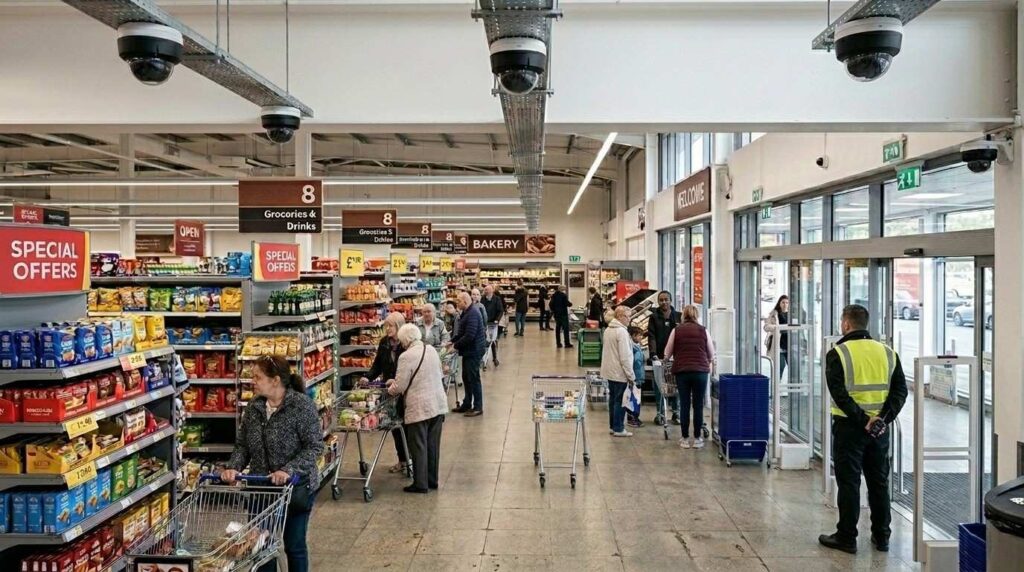
Retail businesses across the UK are facing growing pressure from shoplifting, organised retail crime, vandalism and aggressive behaviour. According to industry reports, retail crime costs reached £3.3 billion in the previous year, while retail theft costs the industry over £1 billion annually. These losses affect businesses of every size, from independent shops to national chains, making physical security a business necessity rather than an optional investment.
A modern retail store security system does far more than record incidents. It protects employees, safeguards customers, reduces financial losses and supports smoother retail operations. When designed correctly, retail security systems combine advanced technology with trained security personnel to create multiple layers of protection. This comprehensive approach helps identify risks early, deter theft and provide essential evidence when incidents occur.
At Proforce Security, we have been protecting UK businesses since 2007 with tailored physical security solutions. As an SIA Approved Contractor, we provide manned guarding, CCTV, alarm response, mobile patrols, key holding and access control services that help businesses create safer environments while ensuring minimal disruption to daily operations.
Let’s move toward the practical and scalable retail store security systems you should know about.
Why Retail Store Security System Matters
Every retail business faces unique risks. A convenience store experiences different security challenges from a luxury retailer, while a supermarket requires a different retail store security system from a shopping centre. Before selecting security systems or anti theft devices, businesses should understand where their greatest vulnerabilities lie.
Financial Loss
Shoplifting, employee theft, organised retail crime and property damage can significantly reduce profitability. However, the wider impact often extends beyond missing stock. Security incidents interrupt store operations, increase insurance claims, damage customer confidence and consume valuable management time. Investing in a professionally designed retail store security system helps retailers reduce these hidden costs while improving operational efficiency.
Employee Well-Being at Risk
Employee wellbeing is equally important. Retail staff regularly encounter difficult situations, including abusive behaviour, attempted theft and confrontations with offenders. Trained retail security personnel help maintain a safe retail environment, giving employees greater confidence during their daily responsibilities. In fact, effective security systems enhance employee morale and safety, creating a workplace where staff can focus on serving customers instead of worrying about potential threats.
Loss of Customer Trust
Customers also notice visible security. Research indicates that 81% of UK consumers prefer shops with visible security measures, demonstrating that retail store security system supports both safety and customer experience. Uniformed security professionals, clearly positioned security cameras and well-maintained access control systems reassure legitimate shoppers while increasing the perceived risk for offenders.
Risk Assessment
An effective retail store security system begins with a thorough risk assessment. This identifies vulnerable entrances, blind spots, high-value merchandise, stockrooms, delivery areas and cash handling processes. Understanding theft patterns allows retailers to place surveillance cameras, access control systems and physical barriers where they will deliver the greatest protection. Rather than applying the same solution to every store, security experts tailor protection around the store layout, customer flow and operational requirements.

Layered Approach
Modern retail security also follows a layered approach. Instead of relying on a single device, multiple security measures work together. Surveillance cameras monitor activity across the retail space. Retail store alarm systems detect break-ins outside business hours. Electronic Article Surveillance (EAS) systems help prevent theft at exits. Access control restricts unauthorised entry into restricted areas. Security personnel provide a visible presence capable of responding immediately to suspicious behaviour. Together, these elements create a robust retail store security system that protects assets while maintaining normal business operations.
Leveraging Technology
Technology has significantly improved physical security over recent years. CCTV was introduced in retail security in the late 20th century, while Electronic Article Surveillance emerged during the 1980s to help reduce shoplifting. Today, AI-driven analytics enhance real-time monitoring and threat detection by helping operators identify unusual behaviour more quickly. Modern video surveillance systems also allow remote monitoring, enabling security teams to oversee multiple locations from a central control room. By 2025, AI integration had transformed many retail store security systems, making threat detection faster and more proactive.
Importantly, technology works best when supported by experienced people. Professional manned guarding services combine technology with human oversight because trained professionals provide judgement that software alone cannot replace. This balance between technology and expertise remains one of the strongest forms of retail loss prevention.
A professionally planned retail store security system can also reduce long-term operating costs. Investing in effective security reduces insurance costs for many retailers by lowering the likelihood of claims and demonstrating strong risk management practices. Integrated, cloud-based security solutions further improve efficiency by consolidating CCTV systems, alarm systems, access control and incident reporting into a single platform.
These integrated systems help retailers respond faster to incidents and reduce theft-related losses while simplifying ongoing management.
Essential Retail Store Security Systems & Devices
A modern retail store security system is most effective when it combines several complementary security measures rather than relying on a single solution. Every retail store has different operational requirements, customer traffic and risk levels, so the right combination of devices should be based on a professional risk assessment. Whether you manage an independent shop or multiple locations across the UK, specialist retail security services help protect assets, improve operational efficiency and strengthen retail loss prevention.
The key components of a retail store security system work together to monitor activity, restrict unauthorised access, deter theft and support rapid incident response. When integrated correctly, these technologies not only reduce losses but also minimise disruption to daily retail operations.
CCTV Surveillance Systems
Surveillance cameras remain the foundation of almost every retail store security system. Modern CCTV systems do much more than record incidents. They help security personnel monitor customer activity, identify theft patterns, detect suspicious behaviour and provide essential evidence when investigations are required.
Today’s high definition cameras produce clear images in a wide range of lighting conditions, making it easier to recognise faces, monitor cash handling and review incidents accurately. Many retailers now use a combination of fixed dome cameras, bullet cameras and PTZ (Pan-Tilt-Zoom) cameras to achieve complete coverage across the retail space.
Large retail environments often require extensive camera coverage. In fact, a retail store may have around 200 cameras installed, while over 200 cameras are typically installed in a retail store such as a large supermarket or department store. This level of surveillance enables security teams to monitor every critical area without creating blind spots.
Access Control Systems
While CCTV monitors activity, access control systems determine who can enter specific parts of a retail store. Restricting access to sensitive areas is one of the simplest ways to reduce internal theft, protect valuable inventory and maintain secure retail operations.
Not every employee requires unrestricted access to every area of a business. Stockrooms, cash offices, server rooms, medicine storage, delivery entrances and management offices should only be accessible to authorised personnel. A professionally designed retail store security system uses access control to manage these permissions efficiently.
Smart locks and biometric systems help reduce internal theft in retail by ensuring that every entry is recorded and traceable. If an incident occurs, managers can quickly identify who accessed a restricted area and when. For businesses operating across multiple locations, cloud-based access control also simplifies administration. Permissions can be updated remotely, allowing businesses to manage employee access without replacing physical keys. This reduces security risks associated with lost keys while improving operational efficiency.
Access control systems also integrate seamlessly with CCTV systems. When an access event occurs, surveillance cameras can automatically record the associated activity, providing valuable evidence should further investigation become necessary.
Electronic Article Surveillance (EAS) Systems

Electronic Article Surveillance, commonly known as EAS, is one of the most effective anti theft devices used throughout the retail industry. Since Electronic Article Surveillance (EAS) emerged in the 1980s to prevent theft, it has become a standard feature in retail security systems worldwide.
EAS systems work by attaching security tags or labels to merchandise. If an item leaves the premises without being properly deactivated at the checkout, detection gates positioned at store exits trigger an alarm.
Electronic Article Surveillance (EAS) systems trigger alarms for unpurchased items, making theft significantly more difficult while reducing accidental stock losses. Their visible presence also increases the perceived risk for offenders, encouraging many opportunistic thieves to abandon attempted theft before entering the premises.
Many retailers combine EAS systems with CCTV and AI-driven analytics to identify theft patterns and detect suspicious behaviour more effectively. Together, these technologies provide valuable intelligence that helps businesses refine their loss prevention strategies over time.
Intruder Alarm Systems
Retail security does not end when the shop closes. A comprehensive retail store security system should continue protecting the premises throughout evenings, weekends and public holidays.
Retail store alarm systems provide immediate notification when unauthorised entry occurs outside business hours. Intrusion alarm systems detect break-ins through door contacts, window sensors, motion detectors and glass-break sensors before automatically alerting monitoring centres or emergency services where appropriate.
Alarm systems minimise property damage and merchandise loss during non-business hours because they reduce the time intruders remain inside the premises. Faster response times often mean lower repair costs and fewer stolen goods.
Modern alarm systems can also integrate with CCTV systems, allowing operators to verify alarms remotely before dispatching security personnel. This integrated approach reduces false alarms while ensuring genuine incidents receive immediate attention.
Panic buttons positioned at tills, customer service desks and staff offices provide an additional layer of protection for employees. During threatening situations, staff can discreetly request assistance without escalating the incident, helping to protect employees while maintaining a safe shopping environment.
Physical Security Measures
Technology alone cannot provide complete protection. Strong physical security remains an essential part of every retail store security system, particularly when protecting valuable stock and preventing forced entry. Physical barriers delay offenders, reduce opportunities for theft and provide valuable time for alarm systems and security personnel to respond.
Depending on the nature of the retail business, physical security measures may include:
- Reinforced entrance and rear service doors
- Security shutters for shopfronts
- High-security locks
- Lockable display cabinets
- Cash safes
- Security bollards protecting storefronts
- Protective screens where appropriate
- Trained personnel at entrances
Physical security measures like locking displays prevent grab-and-run thefts, particularly in stores selling electronics, jewellery or luxury goods. Similarly, high-value items may be secured with specialised dispensers or locked cases, allowing staff to assist genuine customers while limiting opportunities for theft.
Rather than treating each device as a separate investment, retailers should view their retail store security system as a complete ecosystem designed to protect people, premises and profits while ensuring minimal disruption to everyday store operations.
Retail Loss Prevention Best Practices
Even the most advanced retail store security system cannot eliminate every risk without the right operational practices. Successful retail loss prevention depends on combining security technology with well-defined procedures, employee awareness and regular reviews of store performance. This comprehensive approach helps retailers reduce theft, improve operational efficiency and create a safer environment for employees and customers alike.
Invest in Employee Training
Employees are often the first to notice unusual behaviour on the shop floor. Providing regular employee training equips staff with the confidence to recognise suspicious activity, follow security procedures and respond appropriately without placing themselves at risk.
Trained employees work alongside professional security guarding services to strengthen a retail store security system. They understand how to escalate concerns, preserve essential evidence and maintain a calm atmosphere during security incidents. Most importantly, effective training helps protect employees while reinforcing a culture of safety across the business.
Carry Out Regular Inventory Audits
Regular stock checks help retailers identify discrepancies, monitor shrinkage and uncover recurring theft patterns that may otherwise go unnoticed.
When audit findings are reviewed alongside CCTV systems, Electronic Article Surveillance (EAS) reports and access control logs, retailers gain a much clearer understanding of where losses occur. This information supports better decision-making and enables businesses to refine their retail store security system over time.
Routine audits also improve inventory management by ensuring stock records remain accurate, helping retailers maintain product availability while reducing unnecessary costs across commercial operations that may share stock or storage with office and commercial spaces.
Optimise Store Layout and Visibility
The physical layout of a retail store has a direct impact on security. Poor visibility, overcrowded displays and hidden corners create opportunities for offenders to act unnoticed. By designing the retail space with security in mind, businesses can make theft considerably more difficult.
Simple improvements include positioning high-value merchandise within clear sight of staff, maintaining unobstructed views across customer aisles and ensuring surveillance cameras cover areas that naturally attract higher levels of activity. A well-planned store layout supports both customer experience and store safety, helping retailers balance accessibility with effective security measures.
Use Customer Engagement as a Security Tool
Positive customer service is an often-overlooked aspect of retail store security system. Greeting customers promptly, offering assistance and maintaining an active staff presence throughout the shop floor can discourage opportunistic offenders without creating an intimidating shopping experience.
The goal is not to make customers feel watched, but to create a welcoming and well-managed retail environment where criminal activity is less likely to occur.
Review Security Performance Regularly
Retail security challenges continue to evolve, making regular reviews essential. A retail store security system should never remain static. Businesses should periodically assess incident reports, CCTV footage, alarm activations and access control records to identify emerging risks and measure the effectiveness of existing security measures.
Modern systems can support this process through AI analytics and data analytics, which help identify trends, detect suspicious behaviour and highlight areas requiring additional attention. While technology provides valuable insights, experienced security professionals remain essential for interpreting information and making practical recommendations.
Businesses that regularly review their retail store security system, update their security measures and encourage staff participation are better positioned to prevent theft, reduce losses and respond confidently to changing security threats.
Secure Your Retail Business with Proforce Security
Protecting a retail business requires more than installing cameras or alarms. It demands a tailored security strategy that supports your day-to-day operations, strengthens employee safety and adapts to the changing risks faced by modern retail environments. At Proforce Security, we work with businesses across the retail sector to deliver reliable, integrated physical security solutions, including SIA-licensed retail security guards, CCTV systems, mobile patrols, key holding, alarm response and access control services, backed by over 17 years of UK security experience.
Whether you’re upgrading existing systems or planning a complete retail store security system for a new location, our experienced team can help you identify the most effective solution for your business. By combining professional security personnel with proven technology, we help retailers reduce losses, improve operational efficiency and achieve long-term cost savings through smarter risk management.
Get in touch with Proforce Security today for a tailored security assessment and practical advice designed around your business.


